报告题目:Ferroelectric Dynamics for Physical and Chemical Applications
报告嘉宾:Liangzhi Kou Queensland University of Technology
报告时间:2026年6月17日上午10:00
报告地点:唐敖庆楼B区521报告厅
嘉宾简介
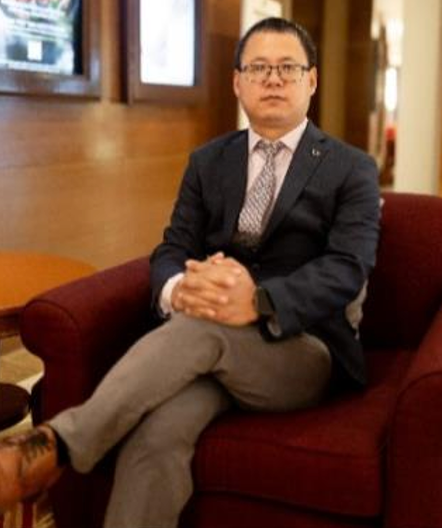
Prof. Kou received his PhD from Nanjing University of Aeronautics and Astronautics, and has held research and academic positions at Bremen University (Germany), the University of New South Wales, and Queensland University of Technology (Australia). His research focuses on first-principles simulations of low-dimensional nanomaterials, with particular interest in multi-physical coupling phenomena—mechanical, electrical, and magnetic—and their applications in energy conversion and storage, nanoelectronic devices, and catalysis.
He has received numerous prestigious awards and recognitions, including a Humboldt Research Fellowship (2012–2014), an ARC Discovery Early Career Researcher Award (DECRA) (2018–2021), inclusion among the world's top 2% of scientists (2021–2025), and the Friedrich Wilhelm Bessel Research Award (2025), JSPS invitational fellow (2026).
To date, Professor Kou has published over 200 peer-reviewed articles in leading journals such as Nature Communications, Journal of the American Chemical Society, Nano Letters, ACS Nano, Advanced Science, and Advanced Functional Materials. His work has garnered around 16,000 citations, with an h-index of 68.
讲座摘要
Ferroelectricity, characterized by reversible electric polarization under an external electric field, has long served as a cornerstone for non-volatile electronics and digital information storage technologies. In this talk, I will present our recent advances in understanding ferroelectric domain formation, polarization switching, and dynamic stability in low-dimensional ferroelectric materials through the integration of density functional theory (DFT), machine learning potentials, and deep learning molecular dynamics (DLMD) simulations. Using CuInP₂S₆ and In₂Se₃ as representative systems, we reveal how stacking configurations, strain engineering, and thermal fluctuations govern the energy barriers and switching kinetics of ferroelectric polarization. Our results further demonstrate that thermal stability and polarization lifetime are highly sensitive to curvature, twist angle, temperature, and external stimuli such as electric fields and mechanical strain, offering new opportunities for the design of next[1]generation low-power electronic devices.
Beyond physical functionalities, I will also discuss how ferroelectric polarization can be exploited to regulate chemical reactions and energy conversion processes. Our recent studies highlight the critical role of switchable polarization in tailoring surface charge redistribution and interfacial electronic structures, thereby modulating reaction pathways and catalytic efficiencies in key systems, including photocatalytic water splitting, electrocatalytic CO₂ reduction, and nitrogen reduction reactions. By dynamically tuning the polarization direction, ferroelectric materials provide a versatile platform for controlling reaction selectivity and enhancing catalytic performance toward sustainable energy and chemical applications.